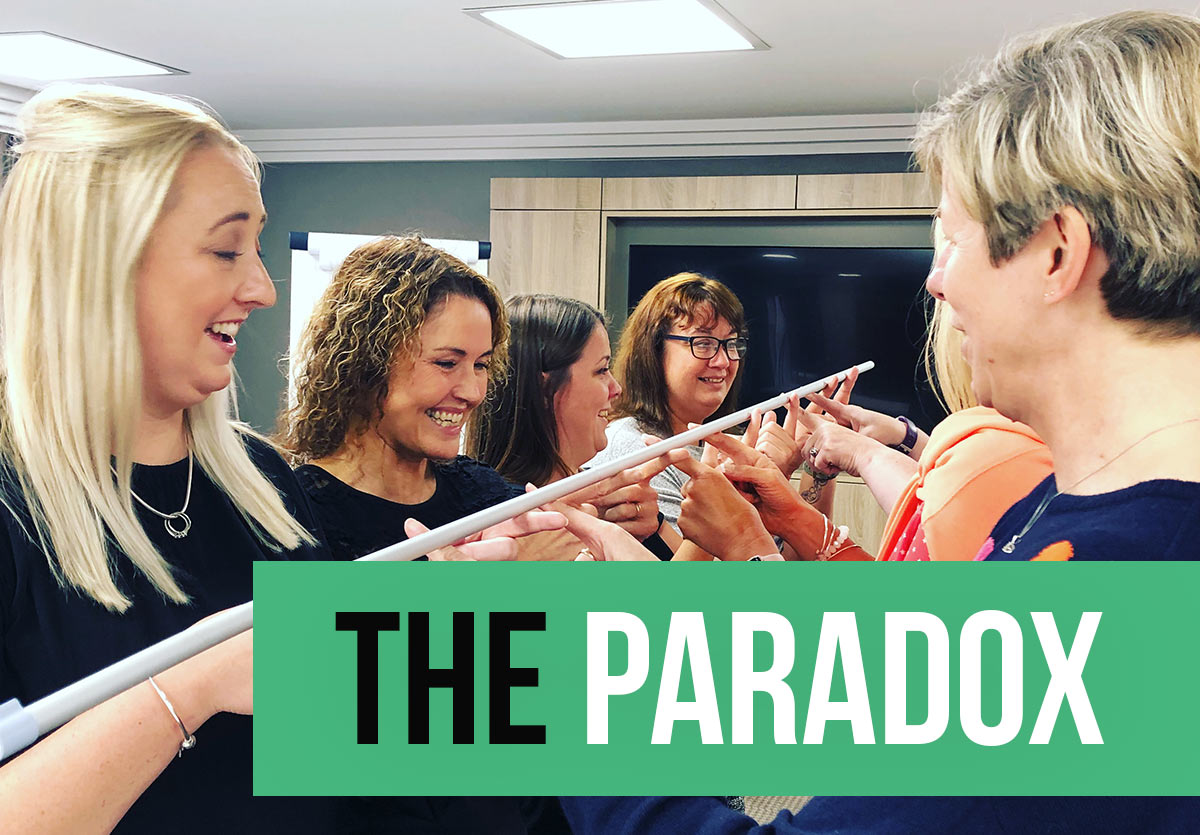
In our quest for success and self-improvement, we often find ourselves caught in a paradoxical cycle, namely because being a human is rarely straight forward. We are complex beings.
I have noticed an interesting dynamic that occurs in high performing clients which creates a paradox I find fascinating.
On one hand, people strive to be the best, aiming for excellence and recognition. On the other hand, this desire can lead to feelings of inadequacy and self-doubt, creating an internal conflict that hinders our progress. Understanding this paradox is crucial for personal growth and developing healthy self-perceptions.
The pursuit of being the best can initially be a motivating force, pushing us to set high goals, work diligently, and achieve remarkable results. However, when this drive for excellence is taken to extremes, it can easily transform into arrogance. Research conducted by psychologist David Dunning and his colleagues reveals that people who perceive themselves as highly competent tend to overestimate their abilities, leading to inflated self-assessments. This overconfidence can hinder growth by blinding individuals to their limitations and preventing them from recognising areas where improvement is needed.
That’s fascinating in itself isn’t it? The desire to be the best, ultimately can hinder progress. Like an inbuilt self-sabotage.
Conversely, the feeling of being lesser than is another extreme that arises when we compare ourselves to others and perceive ourselves as falling short. This can result in a perpetual cycle of self-doubt and negative self-talk.
Psychologist Albert Bandura’s social cognitive theory suggests that self-efficacy, our belief in our own abilities to succeed, plays a significant role in our motivation and behavior. When we constantly feel lesser than, our self-efficacy diminishes, affecting our confidence and hindering our ability to perform at our best.
On both scenarios, I see clients bringing out their pretender, and masking the authentic version of themselves. This is often because they don’t want people to pick up on what is going on.
The perceptions of others is noteworthy.
When individuals exhibit excessive arrogance, they can be viewed as unapproachable or lacking empathy, making it difficult for them to build meaningful connections. Conversely, those consumed by feelings of inferiority may struggle with assertiveness and may be overlooked or undervalued, despite possessing significant talents or skills. These extremes influence the way others perceive us, potentially limiting our opportunities for collaboration, leadership, and personal growth.
Have you ever noticed the person in the room who is jostling for position? How does it make you feel?
Interestingly, it is not uncommon for individuals to move between these two extremes of Being the Best and Feeling Lesser Than.
This oscillation can be attributed to various factors, such as external validation, social comparisons, and personal achievements. For example, someone who achieves great success in a particular endeavor may experience a surge of confidence and temporarily exhibit arrogance. Conversely, a setback or failure might trigger self-doubt and feelings of being lesser than. This constant fluctuation can be emotionally draining and hinder long-term growth and fulfillment.
A person may ace it in one area of life and the ‘being the best’ part of them leads, and then in another area of life they feel lesser than.
This is where the role of a coach becomes essential. A coach can help individuals navigate this paradox and find the sweet spot of confidence and self-assurance.
Through guided self-reflection, belief work, trauma resolution and awareness development, a coach can assist clients in cultivating a balanced mindset that acknowledges their strengths while recognising areas for improvement.
They can provide unbiased feedback, challenge limiting beliefs, and help clients set realistic expectations. Furthermore, a coach can foster self-compassion and resilience, encouraging clients to embrace failures as learning opportunities and celebrating their successes without succumbing to arrogance.
Moving beyond the extremes requires developing a healthy perspective on success and self-worth. It involves acknowledging that true excellence is not measured solely by external achievements or by comparing oneself to others. Instead, it stems from a commitment to continuous growth, personal values, and the pursuit of one’s own potential. Striving for excellence should be rooted in self-improvement, self-awareness, and a genuine desire to make a positive impact, rather than seeking validation or proving one’s worth to others.
In conclusion, the paradox of wanting to be the best and feeling lesser than is a complex emotional struggle that can hinder personal growth and well-being. Balancing the drive for excellence with humility and self-acceptance is crucial for finding fulfillment