I’ve spent the last few weeks quietly watching something happen across the coaching industry.
More coaching schools are talking about emotional regulation. More academics are discussing the limits of traditional coaching models. More leadership experts are recognising that asking good questions alone does not automatically create transformation.
And honestly, I’m pleased to see it.
Because for years, many of us have sat in rooms knowing something wasn’t quite adding up.
Leaders were attending programmes. Teams were doing the personality profiles. People were learning the frameworks. Coaches were collecting certifications. Yet underneath all of that, many people were still exhausted, masking, dysregulated, disconnected from themselves and quietly trying to hold everything together.
The workplace changed faster than the coaching industry did.
AI accelerated things even further. The pace of work became relentless. Hybrid working altered human connection. Leaders became emotionally overloaded whilst simultaneously being expected to remain composed, productive, strategic and endlessly available.
And somewhere inside all of this, many coaching conversations remained incredibly surface level.
I know that won’t be comfortable for everyone to hear, but I think the industry needs to mature enough to have the conversation honestly.
Because if coaching is only helping people sound better, perform better or cope slightly more effectively whilst their nervous system is screaming underneath the surface, then we have to ask deeper questions about what we’re actually doing.
After more than 8,000 hours of coaching conversations, I’ve become less interested in polished answers and far more interested in what sits underneath them.
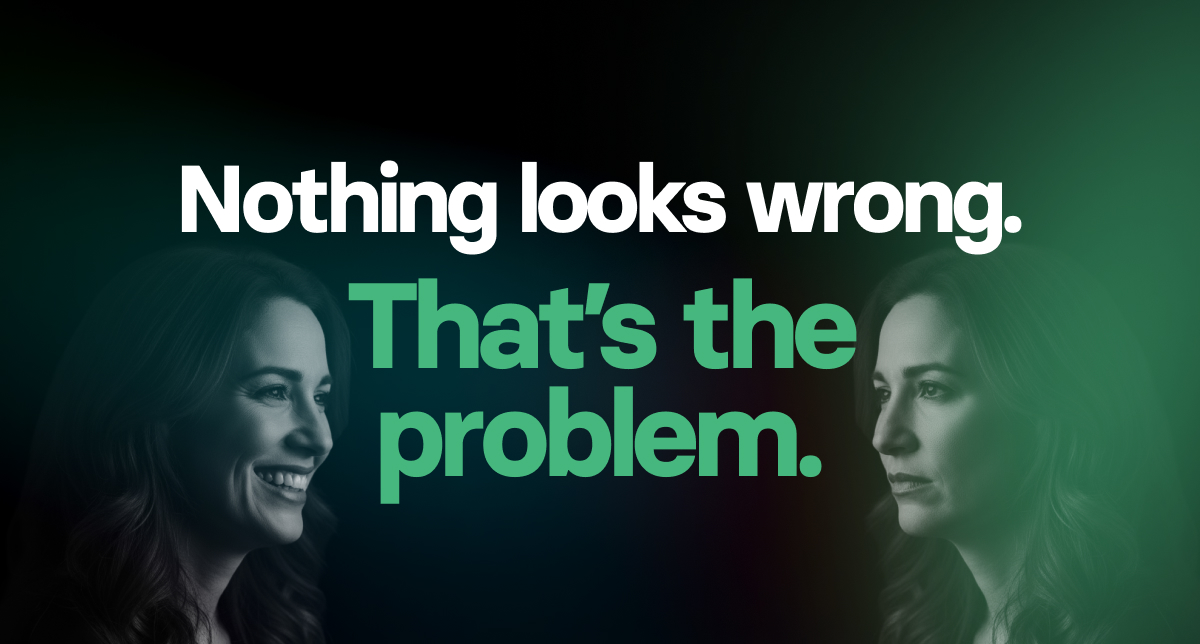
The moment someone says “I’m fine” whilst their whole body says otherwise.
The leader who appears calm externally but is running entirely on pressure and hypervigilance internally.
The people pleasing manager who cannot hold a difficult conversation because acceptance has become psychologically linked to safety.
The perfectionist executive who is admired by everyone around them whilst privately feeling permanently inadequate.
The team member who shuts down in meetings, not because they lack ideas, but because somewhere along the line they learned visibility felt dangerous.
This is the stuff that changes performance.
This is the stuff that shapes culture.
This is the stuff sitting underneath burnout, disengagement, conflict avoidance, control, politics and emotional exhaustion.
Yet much of it still sits outside traditional leadership development and outside traditional coaching conversations too.
At Paseda360, we built our programmes around the belief that behaviour makes far more sense when you understand the human driving it.
Not just their goals.
Not just their KPIs.
Not just the polished version of who they think they should be.
The actual human being underneath it all.
That’s why our work has always integrated emotional regulation, identity, relational dynamics, self-awareness and the nervous system alongside coaching practice itself. Not because it sounds innovative, but because when you sit with enough human beings in enough difficult moments, you realise very quickly that people are rarely stuck because they don’t know enough.
They’re stuck because protection has become automatic.
Protection of reputation.
Protection of belonging.
Protection of identity.
Protection from failure.
Protection from judgement.
And you cannot coach that effectively if all you know how to do is follow a conversation structure.
The strongest coaches and leaders over the next decade will develop something deeper than technique.
Discernment.
The ability to read what’s happening relationally.
The ability to notice incongruence without rushing to rescue or fix.
The ability to regulate themselves in emotionally charged moments.
The ability to challenge without humiliating.
The ability to create safety whilst still holding accountability.
The ability to recognise when someone is protecting themselves rather than resisting growth.
This is also why I don’t believe AI will replace great coaching.
AI will absolutely support coaching. It already does. It can help structure thinking, generate ideas, summarise information and even ask reasonably good questions.
But the coaches and leaders who will truly stand out are the ones who develop human judgement deeply enough that they do not need AI to constantly tell them what they should do next.
Because real coaching is not simply about selecting the correct question from a toolkit.
It’s about sensing what the room needs.
It’s about timing.
It’s about regulation.
It’s about discernment.
It’s about understanding when silence is protection, when humour is masking, when overexplaining is anxiety, when control is fear, when confidence is performance and when someone is finally telling the truth.
That level of awareness does not come from scripts.
It comes from doing your own work as a human being.
I think that’s where coaching is heading now. Or at least where it needs to head if it wants to remain genuinely valuable in the years ahead.
Less obsession with sounding like a coach. More understanding of humans.
Less performance.
More congruence.
Less dependency on rigid models.
More maturity in knowing when structure helps and when it gets in the way.
The encouraging thing for us at Paseda360 is that none of this feels particularly new.
We’ve been building towards this for years.
And if you’ve trained with us already, you’ll probably recognise that these ideas have been sitting quietly underneath our programmes all along.
If you’re a leader wanting to develop a more human, psychologically aware approach to leadership, our free Coaching Leader Shift sprint gives you a practical introduction to this way of thinking.
If you’re a coach looking at where the industry is heading and wondering whether your approach is future fit, take our Future Fit Quiz and see how prepared you are for the next era of coaching.